
Content Creators VS Journalists: Who can we trust with the truth?
Journalists trade on authority, creators on relatability. This critique explores the clash and collaboration shaping the future of trust in news.

In an increasingly fragmented information environment, the question of trust is central to understanding how audiences engage with news.
The 2024 International Journalism Festival (IJF) panel, Digital content creators and journalists: shaping the future of news together, brought these tensions into sharp focus, highlighting the different models of trust-building employed by journalists and content creators.
Recording of the 2024 International Journalism Festival (IJF) panel
While journalism relies on traditional standards and editorial oversight, digital content creators cultivate trust through transparency, relatability and direct engagement with their audiences. Often, the parties are made to feel like enemies—but really, the future trust economy of news depends on their collaboration.
The real question is not which party we should trust; it is how we should chart the most sustainable future—together.
The Bare Bones of Trust-Building
Trust is a manifold concept—context-driven and relational by nature. Mayer, Davis, and Schoorman’s 1995 An Intergrative Model of Organisational Trust conceptualises trust as a function of the following three factors:
Ability: the skills and competencies that enable a party to act effectively within a given domain
Benevolence: the extent to which a trustee is believed to want to do good for the trustor
Integrity: the compliance to principles that the trustor finds acceptable
This framework allows for comparison between journalists who emphasise ability through expertise and institutional credibility, and creators whose benevolence and integrity are often foregrounded through perceived authenticity and personal connection.
Recent surveys confirm that journalism’s authority is being progressively challenged by the rise of content creators.
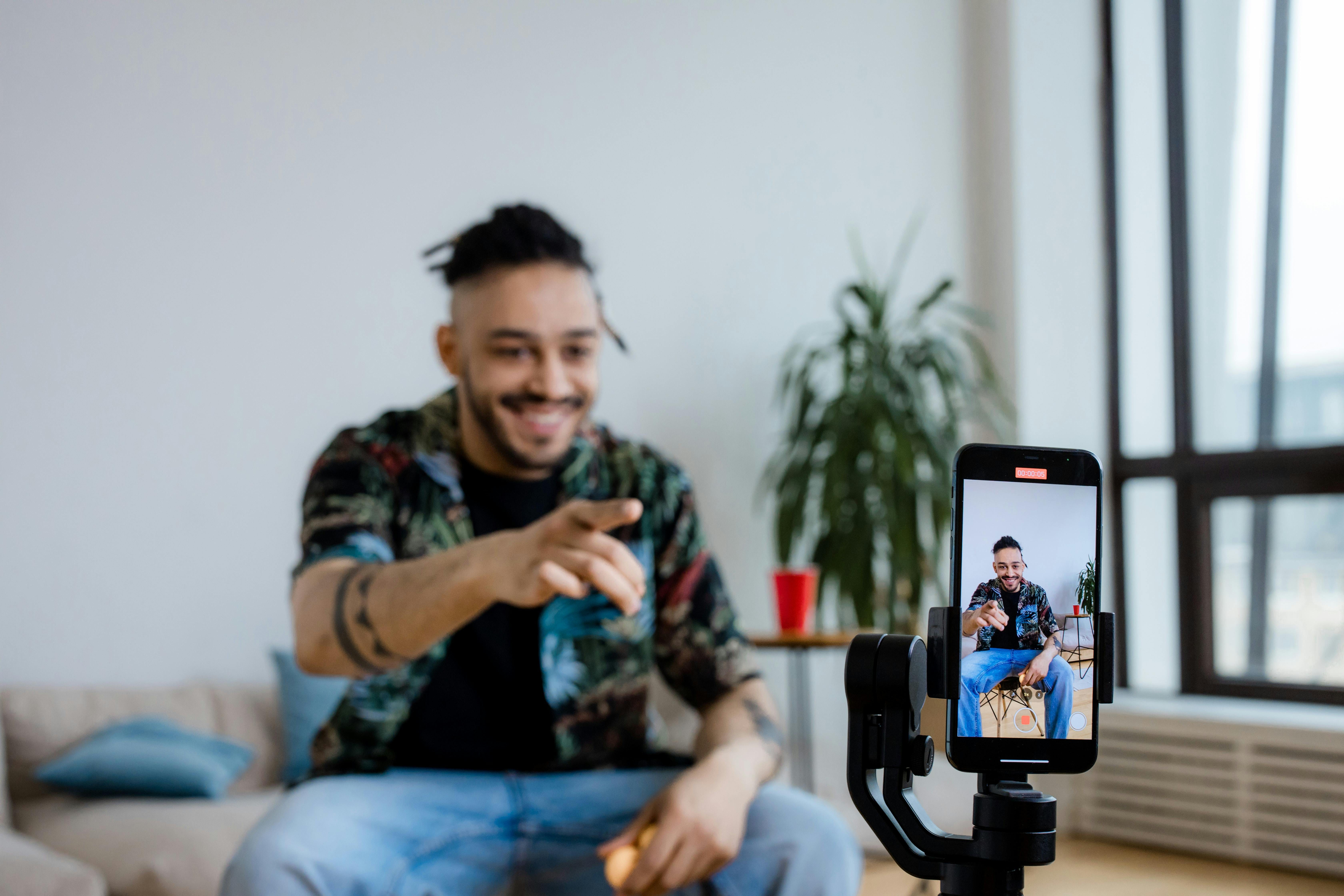
One such example of a content creator on the job. Image supplied by Ron Lach.
A 2025 Reuters Institute report found that a quarter of journalists viewed the shift toward influencers becoming news informers as negative for journalism, citing credibility concerns.
Meanwhile, UNESCO’s 2023 Behind the Screens study revealed that 63% of influencers lack rigorous fact-checking protocols, and 42% rely on social media metrics such as likes and shares as credibility markers.
As it seems, the very idea of what qualifies as ‘trustworthy’ information is contested.
How Journalists Build Trust
Traditional journalism has historically constructed trust around professional standards of objectivity, verification, and editorial oversight. As the 2024 IJF panel made clear, journalists benefit from a board of editors who fact check and ensure “all odds are covered” before risking publication. Here, the ability dimension of trust is most evident, as journalists demonstrate technical competence and investigative rigour.
Integrity also plays a central role in journalism’s trust claims.
Consistent adherence to ethical codes of conduct is expected, even if audiences sometimes question whether these ideals are met in practice. However, as the panel discussed, even reputable news outlets have been criticised for spreading misinformation yet retained their loyal followings. This paradox highlights a weakness in journalism’s trust economy:
Institutional credibility may not be as fragile as creator’s reputational capital, but it can be perceived as distant or elitist. Certainly not benevolent, one might add.
This is where journalism’s reluctance to foreground benevolence creates an additional limitation. Traditional newsrooms seldom advertise their reporter’s expertise or personal motivations, which leaves a considerable gap that creators exploit. As the Shorenstein Center observed in 2023, audiences often know little about journalists beyond their bylines, whereas creators “prioritise demonstrating their expertise directly to their audiences”.
This omission leaves the bridge between journalists and audiences half built, and their ability to develop relational connections seriously underdeveloped.

A visual of how relational connections between journalists and their audience remain out of reach. Image supplied by Anna Shvets.
How Content Creators Build Trust
Content creators, by contrast, often feel like friends popping up on your social media feed. They construct trust primarily through benevolence and integrity—which in their world, are framed as authenticity, transparency, and engagement.
TikToker and IJF panellist V Spehar captures their peer-level approach: “I am not doing news at you. We are doing news together. And that has cost me and that has benefitted me.”
It is creators’ relatability that ultimately sets them apart from traditional news outlets.
As founding editor of FactsMatterNG Hannah Ajakaiye noted during the panel discussion, half of Nigeria’s population is under 18 and uninterested in traditional fact-checking. These audiences trust creators because they “share information in the language that they understand” and are “very, very authentic”.
This is basically what An Integrative Model of Organisational Trust defines as benevolence—showing up for your audience in the way they need.
Creators also emphasise integrity through openness. Many, such as medical TikToker Mohammad Siyab Panhwar, mention their credentials in every video to demonstrate transparency.
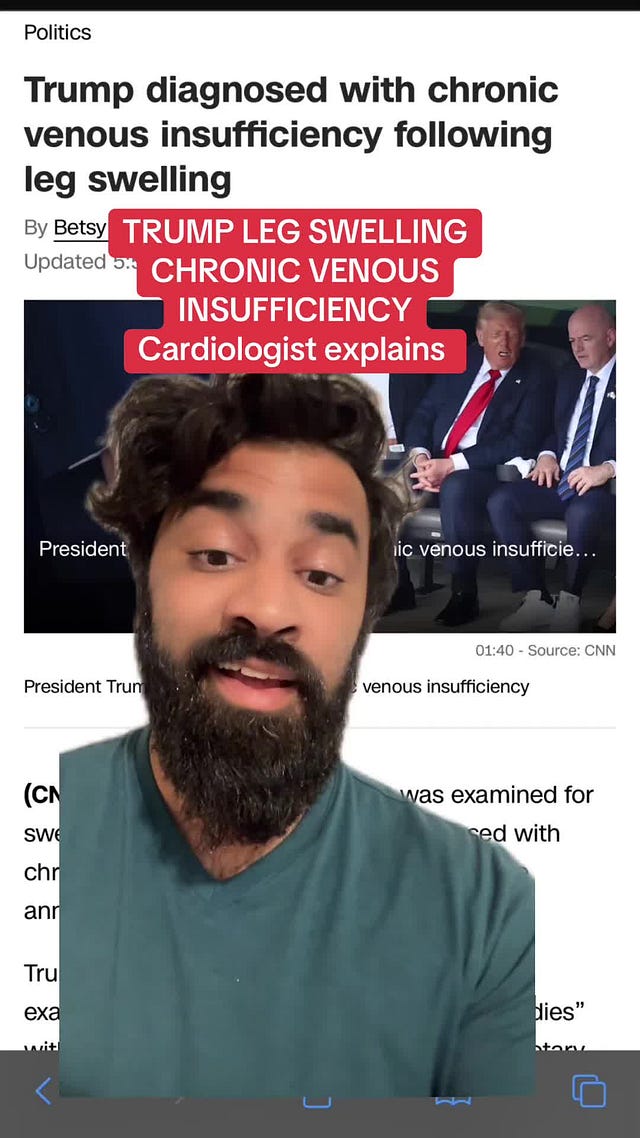
 Tiktok failed to load.
Enable 3rd party cookies or use another browser
Medical TikToker Mohammad Siyab Pahnwar in action.
Yet integrity here is precarious. While creators are accountable to their audiences—“you could have thousands of people make a video about how stupid you are if you’re wrong,” as Spehar warned—UNESCO’s survey found that only 14% of creators had received training in fact verification.
The panel discussed creator’s tendency to cross their fingers and toes and trust that established outlets to get the facts right—every time. Of course, this dependence sparks doubts about whether creators can uphold fact-checking standards on their own.
Nevertheless, creators’ trust advantage lies in intimacy.
Spehar noted, “People watch movies and scroll…I know that folks watch me 20 minutes before they go to bed and when they’re in the bathroom…So that’s how I make my content for those times…because that’s what makes [me] successful.”
This micro-habitation of audiences’ everyday routines generates parasocial trust. It is something difficult—if not currently impossible—for journalists to replicate.
Divergence Between Competing Trust Models
As established, journalists and creators embody divergent trust logics. Journalists foreground ability and institutional integrity, while creators prioritise benevolence and perceived authenticity.
Yet through variance, emerges both challenge and opportunity.
Fact-checking gaps are a primary concern. Journalists are bound by long-running professional routines of verification, but creators often substitute speed and personality for thoroughness.
As Adeline Hulan of UNESCO stressed during the 2024 IJF, “Two-thirds of them [creators] were not doing any fact-checking before sharing information.” However, creators face harsher reputational consequences—repeated misinformation can end a career, while major outlets are proven to recover more easily.
Engagement and accountability also differ. Journalists traditionally engage in a one-way dissemination model, whereas creators rely on dialogic interaction.
2024 IJF moderator Summer Harlow observes that both produce content for audiences, but creators’ peer-level engagement builds participatory trust absent from traditional journalism. Here lies a tension between integrity as adherence to principles and integrity as transparency of process.
Finally, audience expectations diverge. Journalists are judged by accuracy and neutrality—even when imperfectly delivered. Creators are judged by authenticity and relatability.
Many audiences “don’t have cable. They don’t watch the news. They don’t even read the news. They don’t trust the news. They trust us more than mainstream media, unfortunately.”
Behold, an existential challenge for journalism: traditional markers of ability may no longer cut it when it comes to sustaining trust.
Collaboration and Hybrid Trust Models
Tensions aside, collaborations between journalists and creators suggest pathways toward hybrid trust models. Sustainable trust models.
Hulin described Australia’s program where five TikTokers were embedded in newsrooms, reaching over 50 million young people. Similarly, collaborations between the Washington Post and creators such as Spehar prove that journalism can expand its reach while lending credibility to creators.
As to be expected, these collaborations are not without friction.

A visual of the friction between journalists and content creators attempting collaboration. Image supplied by cottonbro studio.
Harlow notes that, in her experience with meshing the parties, creators initially questioned why they should do extensive fact-checking and journalists were wary of sharing authority.
Over time, as mutual benefit was realised, the partnerships grew warmer. Creators amplified journalistic content, and journalists provided mentorship on verification and ethics.
Spehar advocated for reframing creators and journalists not as competitors but allies against “the billionaires, the owners of the channels and the newspapers who are conglomerating money…the actual enemy here.”
Such hybrid approaches align with An Integrative Model of Organisational Trust by integrating all three trust dimensions. Together, journalists and content creators provide a full package of untapped potential.
To Sum It Up…
Trust in news is undergoing profound transformation. That is fact.
Traditional journalism builds trust through professional standards of ability and institutional integrity but struggles to demonstrate benevolence or intimacy with audience.
Meanwhile, content creators thrive on the very things journalists lack. Though their inconsistent integrity practices fall short of the mark in regard to credibility.
In the shortform news ecosystem, where audiences consume content in unorthodox, evolving ways, journalism’s survival depends on its willingness to adapt to new relational dynamics of trust.
The most promising road forward is thus one without a fork. The future of trustworthy news will not be secured by journalists or creators alone, but by their capacity to collaborate and learn from each other.

The imagined, collaborative future between journalists and content creators as the new ‘norm’. Image supplied by fauxels.
References Used
Mayer, R. C., Davis, J. H., & Schoorman, F.D. (1995). An integrative model of organizational trust. Academy of Management Review, 20(3), 709-734. https://qut.primo.exlibrisgroup.com/discovery/fulldisplay?docid=cdi_proquest_journals_210972446&context=PC&vid=61QUT_INST:61QUT&lang=en&search_scope=MyInst_and_CI&adaptor=Primo%20Central&tab=Everything&query=any,contains,an%20integrative%20model%20of%20organisational%20trust&offset=0
Reuters Institute. (2025). Journalism, media, and technology trends and predictions 2025. Reuters Institute for the Study of Journalism. https://reutersinstitute.politics.ox.ac.uk/journalism-media-and-technology-trends-and-predictions-2025#header--5
Shorenstein Center. (2023). The future of trustworthy information: Learning from online content creators. Harvard Kennedy School. https://shorensteincenter.org/future-trustworthy-information-learning-online-content-creators/
UNESCO. (2023). Behind the screens: UNESCO global survey on influencers and information integrity. United Nations Educational, Scientific and Cultural Organization. https://news.un.org/en/story/2024/11/1157546#:~:text=The%20study%20found%20that%2063,significant%20impact%20on%20public%20discourse
International Journalism Festival. (2024). Digital content creators and journalists: shaping the future of news together [Video]. YouTube.